
Sciatica vs Piriformis Syndrome: What’s Causing Your Leg Pain?
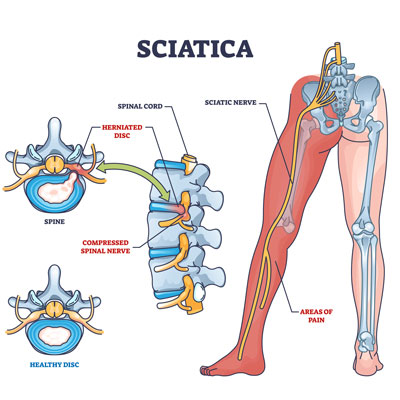
Sciatica vs piriformis syndrome can be difficult to tell apart because both can cause buttock pain that travels down the leg. The key difference is where the nerve irritation or involvement originates.
At Chiropractic Care Centre in South Tampa, we look at your symptom pattern, movement, and signs of nerve involvement to help identify the likely source of pain.
Sciatica vs piriformis syndrome: Quick comparison
Although both conditions can cause buttock and leg pain, their typical symptom patterns and triggers can provide useful clues.
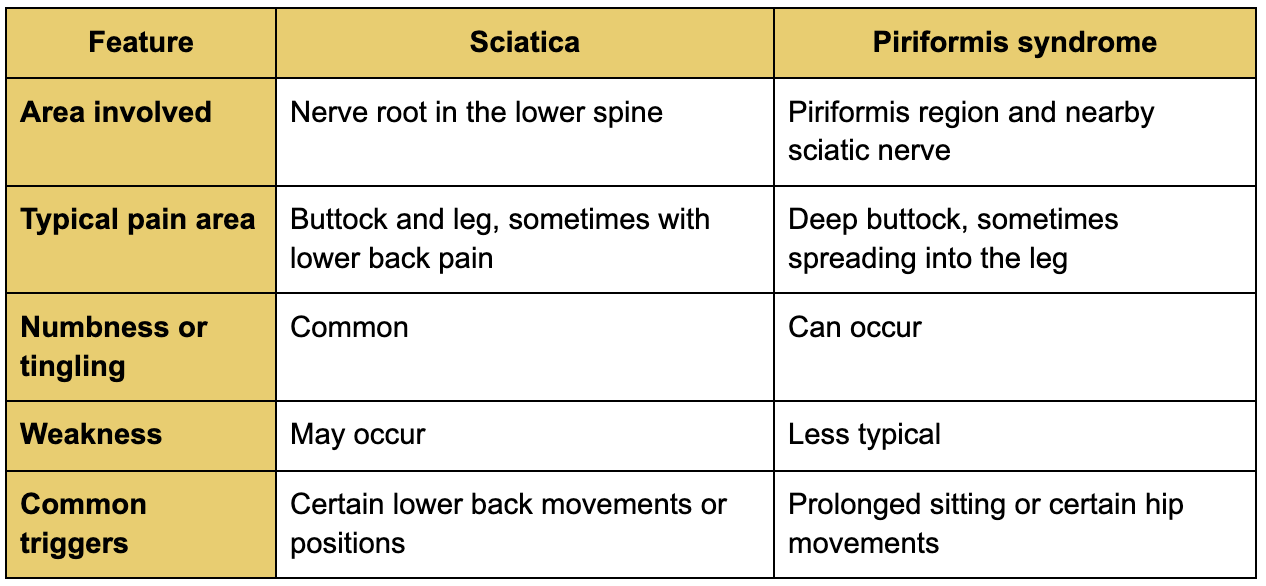
These patterns can help narrow down the possible cause, but they cannot confirm a diagnosis on their own.
What is sciatica?
Sciatica is a group of symptoms that occurs when a nerve root in the lower spine that contributes to the sciatic nerve becomes irritated or affected. Common causes include a herniated disc and spinal stenosis.
Symptoms may include:
- Sharp, burning, or electric pain from the buttock down the leg.
- Tingling or numbness in the leg or foot.
- Muscle weakness in some cases.
- Pain that changes with certain lower back movements or positions.
Lower back pain may occur, but some people mainly feel symptoms in the buttock and leg. A disc problem is one possible cause, so understanding the signs of a herniated disc can help explain when leg pain may be related to the lower spine.
What is piriformis syndrome?
Piriformis syndrome is a condition associated with pain in the buttock around the piriformis muscle, sometimes with irritation of the nearby sciatic nerve. The piriformis is a small muscle located deep in the buttock that helps with hip movement.
Symptoms may include:
- Deep buttock pain.
- Pain that travels into the back of the thigh or leg.
- Tingling or numbness.
- Pain that becomes worse with prolonged sitting or certain hip movements.
Compared with sciatica caused by a spinal nerve problem, piriformis syndrome tends to cause more noticeable pain around the buttock. However, symptoms can overlap, so pain location alone cannot confirm the cause.
How are sciatica and piriformis syndrome diagnosed?
Distinguishing sciatica from piriformis syndrome involves looking at the symptom pattern and examination findings together. An evaluation may include:
- Health and symptom history. Where the pain begins, how far it travels, what makes it worse, and how long it has been present can provide useful clues.
- Spine and hip movement. Different movements may reproduce or relieve symptoms and help narrow down where the problem may be coming from.
- Neurological examination. Strength, sensation, and reflexes may be checked when nerve root involvement is suspected.
- Physical tests. Specific movements may be used to assess the spinal nerves or reproduce symptoms around the piriformis region.
- Imaging when appropriate. X-rays, MRI, or other imaging may be considered when examination findings, neurological changes, trauma, or persistent symptoms suggest that more information is needed.
Can you have piriformis syndrome and sciatica at the same time?
Yes. Sciatica and piriformis syndrome can occur at the same time because they involve different areas. Sciatica may result from irritation of a nerve root in the lower spine, while piriformis syndrome involves the piriformis region in the buttock and may irritate the sciatic nerve nearby.
When both are present, a person may experience symptoms related to the lower spine along with deep buttock pain or symptoms triggered by certain hip movements or prolonged sitting.
Does treatment differ for sciatica and piriformis syndrome?
Yes. Treatment depends on where the symptoms are coming from, what is contributing to them, and the findings from the examination.
Care for sciatica
Conservative care for sciatica varies according to the cause, severity of symptoms, neurological findings, and response to care.
Depending on the individual, care may include activity changes, appropriate exercise, chiropractic care, and rehabilitation.
For selected disc-related problems, spinal decompression therapy may also be considered. This approach uses controlled traction on targeted areas of the spine. It is not appropriate for every cause of leg pain, which is why identifying the likely source of the symptoms comes first.
Care for piriformis-related pain
When symptoms are related to the piriformis region, care may focus more on the hip, buttock, and contributing movement patterns.
Depending on the findings, this may include modifying activities that aggravate symptoms, improving hip mobility, appropriate stretching, and strengthening the muscles that support hip and pelvic movement.
The key difference is that similar leg pain does not always require the same treatment. Care should address the likely source of the symptoms rather than the location of pain alone.
When should sciatica or piriformis symptoms be evaluated?
Both sciatica and piriformis syndrome can cause pain that travels from the buttock into the leg. Consider an evaluation if this pain is not improving, keeps returning, or is accompanied by increasing numbness, tingling, or weakness.
Seek prompt medical care for significant or worsening leg weakness, loss of bladder or bowel control, numbness around the groin or saddle area, or severe symptoms after a major injury.
Finding the source of your symptoms
Similar symptoms do not always have the same source or require the same approach to care. Identifying the likely cause helps guide the next step.
At Chiropractic Care Centre in South Tampa, we evaluate the likely source of your symptoms before recommending care. Depending on the findings, conservative options may include chiropractic care, appropriate exercise, or spinal decompression for selected spinal conditions.
If you are unsure what is causing your buttock or leg pain, contact us to schedule an evaluation.
Frequently asked questions
Is piriformis syndrome the same as sciatica?
No. Sciatica usually involves irritation of a nerve root in the lower spine. Piriformis syndrome is associated with pain around the piriformis muscle in the buttock and may involve irritation of the nearby sciatic nerve.
Can piriformis syndrome cause pain down the leg?
Yes. Piriformis syndrome can cause pain that spreads from the buttock into the back of the thigh or farther down the leg when the nearby sciatic nerve is irritated.
Does sciatica always cause lower back pain?
No. Some people with sciatica mainly feel pain, tingling, or numbness in the buttock and leg. Lower back pain can occur, but it does not have to be present.