
What Does a Herniated Disc Feel Like? 6 Signs You Need to Know
Understanding what does a herniated disc feel like helps you distinguish serious nerve compression from simple muscle strain. The difference matters because herniated discs require specific treatment to prevent permanent nerve damage.
Let’s walk through the telltale signs and what you can do about them.
Is It a Herniated Disc or Just a Muscle Strain?
Before diving into specific symptoms, here’s a quick comparison to help you identify what you’re dealing with.
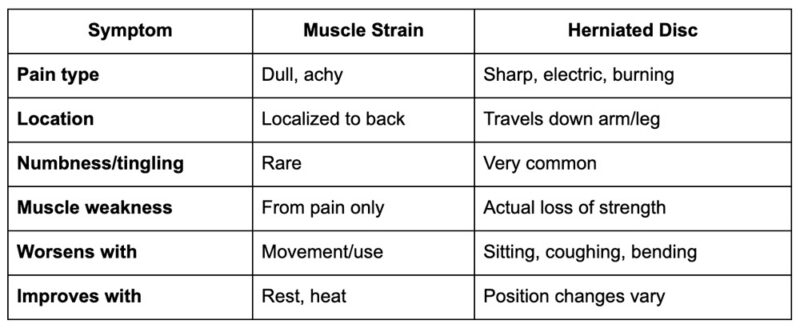
If your symptoms lean heavily toward the right column, you’re likely dealing with disc herniation requiring professional evaluation.
6 Signs of a Herniated Disc
1. The “Electric Shock” Sensation
This is the hallmark of what does a herniated disc feel like – sudden, sharp, electric pain shooting down your arm or leg like a lightning bolt.
Why this happens: Your disc’s inner gel-like material (nucleus pulposus) has pushed through the outer layer and is pressing directly on a nerve root. When you move wrong, that pressure intensifies, sending shock-like pain signals down the entire nerve pathway.
Common descriptions patients use:
- “Like touching an electric fence”
- “A hot poker stabbing down my leg”
- “Lightning bolts from my back to my toes”
- “Electric current running through my arm”
This isn’t muscle pain – it’s nerve pain, and it demands attention.
2. Positional Agony: When Sitting or Coughing Explodes the Pain
Certain positions or actions dramatically intensify disc herniation symptoms because they increase pressure inside the disc, forcing more material against the nerve.
Pain-triggering positions/actions:
- Sitting: Increases disc pressure by 40% compared to standing
- Forward bending: Forces disc material backward toward nerves
- Coughing/sneezing: Sudden pressure spike compresses disc further
- Lifting: Loads disc while in vulnerable position
If you find yourself avoiding chairs and prefer standing or lying down, disc herniation is likely.
3. The “Dead Leg” or Numbness
Numbness isn’t just “weird tingling” – it’s actual loss of sensation in specific skin areas called dermatomes. Each nerve root supplies sensation to a particular region.
Dermatome numbness patterns:
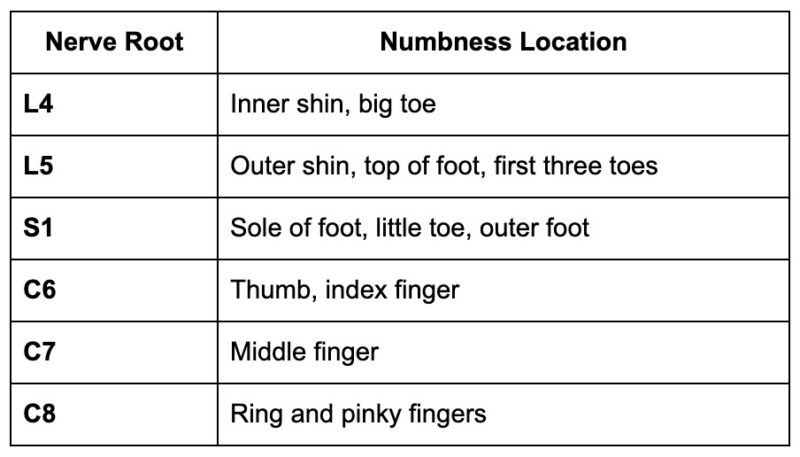
This specific pattern distribution helps identify exactly which disc has herniated. It’s one of the clearest indicators you’re dealing with nerve compression, not muscle problems.
4. Muscle Weakness & Stumbling
When a disc compresses a nerve severely enough, it doesn’t just cause pain and numbness – it prevents motor signals from reaching muscles. This creates actual weakness, not just pain-limited function.
Lower back herniations:
- Difficulty standing on toes (S1 nerve)
- Foot drop when walking (L5 nerve)
- Inability to squat (L4 nerve)
- Stumbling or tripping frequently
Neck herniations:
- Weak grip strength
- Difficulty holding objects
- Arm fatigue with minimal activity
- Trouble turning doorknobs
If you’re dropping things, tripping, or noticing actual strength loss – not just pain-avoidance – you need immediate evaluation.
5. The Burning “Hot Wire”
While electric shocks are intermittent, many herniated disc patients describe constant burning pain along the nerve path – like a hot wire running from spine to extremity.
This deep, relentless burning sensation indicates chronic nerve irritation. The disc isn’t just occasionally pressing on the nerve – it’s creating constant inflammation and compression.
Burning pain characteristics:
- Constant vs. intermittent
- Deep, not surface-level
- Follows specific nerve pathway
- Doesn’t respond to typical pain relievers
- May worsen at night
This chronic burning often intensifies before bed because lying flat increases disc pressure in certain herniation patterns.
6. The Antalgic Lean
Look in a mirror. Are you standing crooked? Many herniated disc patients develop an antalgic lean – unconsciously tilting away from the painful side because standing straight is impossible.
Why this happens: Your body automatically positions itself to minimize nerve compression. If leaning right reduces pressure on the nerve, your muscles will hold you in that position reflexively.
This isn’t conscious posturing – it’s protective muscle guarding. Trying to “stand up straight” creates unbearable pain because it increases disc pressure on the nerve.
At our chiropractor Tampa office, we photograph patients’ posture during their first visit. The antalgic lean often resolves within weeks of starting decompression therapy as nerve pressure decreases.
How Spinal Decompression “Un-Pinches” the Nerve
The Vacuum Effect: Negative Pressure Pulling Disc Material Back
Spinal decompression therapy uses controlled traction to create negative pressure inside the disc space. This vacuum effect literally pulls herniated disc material back toward the center, away from the nerve.
The decompression mechanism:
- Gentle traction separates vertebrae slightly
- Negative pressure develops inside disc
- Herniated material retracts from nerve root
- Pressure on nerve decreases
- Pain, numbness, and weakness improve
Rehydrating the Disc: Bringing Nutrients Back
Discs don’t have blood supply – they rely on diffusion for nutrition. Herniated, compressed discs become dehydrated and degenerative.
Decompression’s pumping action:
- Creates pressure changes that pump nutrients in
- Draws oxygen and water into disc
- Removes metabolic waste products
- Promotes actual disc healing
This isn’t just symptom relief – it’s tissue regeneration.
Why Decompression Is the “Non-Surgical” Gold Standard
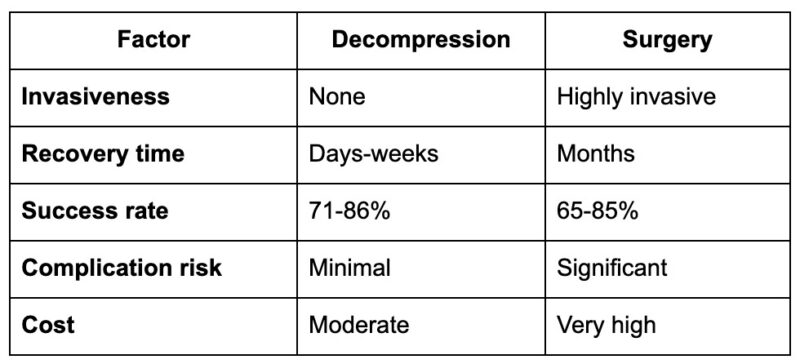
Understanding what does a herniated disc feel like is important – but knowing you have non-surgical options is empowering.
Decompression vs. surgery comparison:
Don’t Let Nerve Damage Become Permanent
Now you know what does a herniated disc feel like – electric shocks, positional agony, numbness, weakness, burning pain, and antalgic posturing. If you’re experiencing these symptoms, waiting won’t help.
The sooner you address nerve compression, the better your outcomes. Prolonged compression can cause permanent nerve damage that even successful treatment can’t fully reverse.
At Chiropractic Care Centre, we specialize in non-surgical spinal decompression for herniated discs. We’ve helped hundreds of patients avoid surgery by addressing nerve compression mechanically – pulling the disc material away from the nerve and allowing natural healing.
Call Chiropractic Care Centre now or book online. Don’t let a herniated disc steal your quality of life or become permanent nerve damage.