
Office Worker Chiropractic Tampa: Relief for Desk Job Neck and Back Pain

People searching for Office Worker Chiropractic Tampa often have one thing in common. After spending hours working at a computer, they begin to notice stiffness in the neck, shoulders, or back. At first, the discomfort only appears toward the end of the workday. Over time, it becomes more frequent and starts affecting work performance, sleep, and everyday activities.
Eight hours a day in a chair is a load your body was not designed for. Painkillers quiet the signal. At Chiropractic Care Centre in South Tampa, Florida, care focuses on identifying and addressing the factors that may be contributing to pain from long hours at a desk.
Why office workers get more neck and shoulder pain
Sitting for hours compresses the spine
Sitting puts more pressure on the discs of your lower back than standing does. Prolonged sitting also slows circulation through the muscles holding you upright, so they tire faster and start to ache.
That fatigue is why the same chair feels fine at 9 AM and unbearable by late afternoon.
Forward head posture from computer screens
Your head weighs 10 to 12 pounds balanced over your shoulders. Push it toward a screen and the muscles behind it work against gravity all day.
That posture pulls the shoulders forward with it. Tension builds across the upper back, and that band between the shoulder blades becomes the spot you keep asking someone to press.
Poor ergonomics at work
Three things go wrong in almost every setup we see. The chair sits too low, so you reach up to type. The monitor sits below eye level, so you look down for hours. The keyboard sits too far forward, so your arms hang unsupported.
None of them hurt on day one. All of them add up.
Symptoms an office worker should not ignore
These build slowly. At first they clear overnight, then arrive earlier each day.
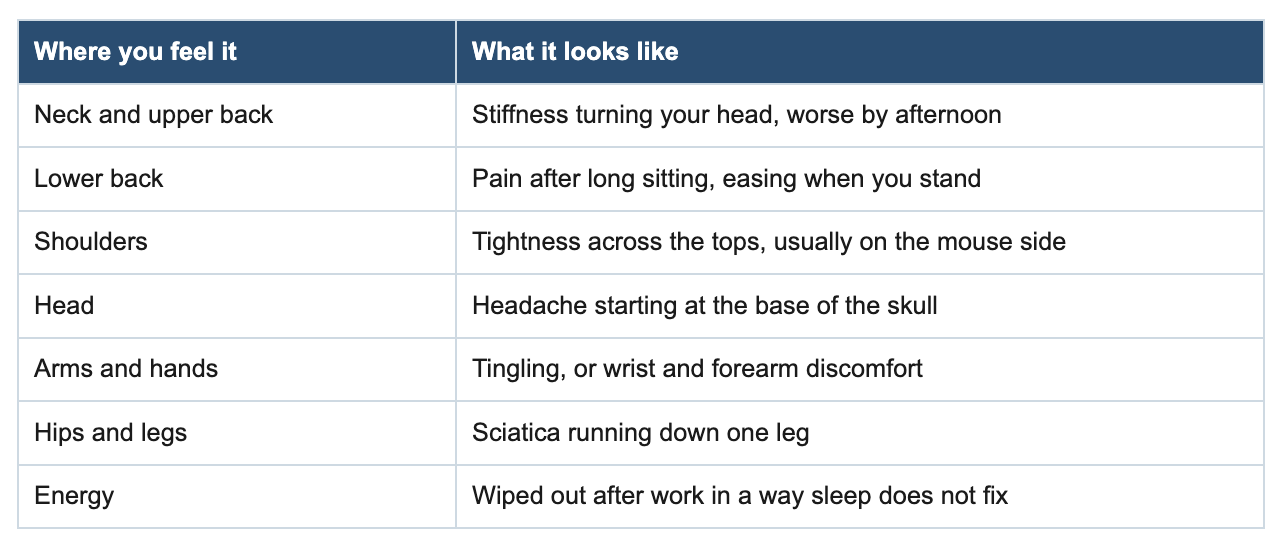
Some things need a doctor rather than us
Numbness, new weakness, loss of balance, a severe headache, chest pain, or symptoms after a serious injury need prompt medical attention. A chiropractor should refer you on when the findings point elsewhere, and we do.
How chiropractic care helps office workers
Chiropractic care is more than a quick adjustment. Your visit starts with your history and a proper examination. We ask what makes it worse, how your workstation is arranged, and whether anything travels into an arm or leg.
A personalized spinal and posture evaluation
The evaluation covers posture, range of motion, muscle tension, joint movement, and simple strength and nerve checks. That tells us whether we can help you, which approach fits, and what should improve first.
Imaging is not needed for every case. We consider it when your history or examination gives a clear reason, and not otherwise.
Gentle chiropractic adjustments
An adjustment restores motion to a joint that has stopped moving properly. That reduces the muscle guarding around it and reduces pressure on the nerves passing through. Mobility usually returns before the ache fully settles.
We tailor the method and the pressure to you. Some people do well with hands on work, others need a low force approach, and we choose from the exam rather than habit. Better alignment follows better motion, not the other way round.
Posture correction and exercise
Your plan includes stretch and exercise work you do at home, targeting the chest, upper back, hips, core, and shoulder muscles. That is where office work does its damage.
This part prevents the same load building again. It takes minutes, and it makes the change hold.
Workplace habits that make pain worse
Crossing the same leg for hours. Tips your pelvis and twists everything above it.
Leaning toward the monitor. Bring the screen closer instead of bringing yourself forward.
Working off a bare laptop. The screen and keyboard are attached, so one is always wrong. A separate keyboard reduces the compromise.
Keeping the mouse at arm’s length. That reach loads one arm all day.
Pinning the phone with your ear. Ten minutes of that undoes a good morning.
One position for hours. The problem is not sitting. The problem is not moving.
The best posture is not one perfect pose held all day. A supported position that changes often will treat you better, and variety prevents more trouble than any single fix.
Simple ways to protect your spine during the workday
Start with one or two of these. Small changes prevent a lot.
- Stand, walk, or reset your posture every 30 to 45 minutes. Set an alarm. This single habit beats any gadget you could buy.
- Put the main monitor straight in front of you, top of the screen at or just below eye level. It improves head position immediately.
- Get both feet supported, by the floor or a footrest.
- Sit back so the chair holds your lower back. A rolled towel behind the belt line reduces the load on your discs.
- Keep the keyboard and mouse close, so your shoulders stay down.
- Keep wrists in line with your forearms, not bent upward.
- Take short stretch breaks. A doorway chest stretch takes thirty seconds.
- Relax your shoulders. Avoid shrugging them while typing or using the mouse.
When should an office worker visit a chiropractor?
Come in when the pain lasts more than a week, returns every workday, limits how far you turn, or makes sleeping hard. An evaluation is also worth it when head pain tracks with tension, or when nerve pain travels into an arm, hip or leg.
Do not wait for it to get severe. We address the habits early, because they are easier to change than habits eight months deep. Chiropractic is not right for every symptom, and the first visit exists to work out which situation you are in.
See more: Signs Your Pain Is Becoming Chronic
Why Tampa office workers choose Chiropractic Care Centre
Dr Dean Brown has been helping patients in South Tampa for more than 20 years. He graduated magna cum laude from Life University after completing his undergraduate studies at the University of Florida and has completed postgraduate training in spinal rehabilitation, spine disorders, and whiplash injuries.
At Chiropractic Care Centre, every treatment plan is based on a thorough examination and your individual needs. Depending on your condition, care may include chiropractic adjustments, spinal decompression, or laser therapy. Every recommendation is personalized because no two patients have the same condition.
Take the next step toward a more comfortable workday
Office work loads your spine in small doses, every day, for years. Neck stiffness, aching, and tight upper backs are common, but none of it is a normal part of the job.
If you want to know what is actually going on, schedule a consultation and find out.
Frequently asked questions
Can a chiropractor help desk job neck pain?
A chiropractor can help by assessing how far you turn, how you sit, and where the tension sits. Care combines an adjustment, exercise, and an ergonomic recommendation.
Can chiropractic care improve posture?
It restores the joint motion upright posture requires, and the exercises build the strength to hold it. Lasting change needs the workstation to change too.
How many visits will I need?
No single number fits everyone. It depends on your findings, how long this has been building, and how you respond.
Should I wait until the pain becomes severe?
No. Come in when symptoms keep returning or start limiting work, sleep, or exercise. Early attention is prevention, and it beats recovery every time.