
When Should You Choose Spinal Decompression? 7 Signs It Might Be the Right Next Step
You’ve tried rest. You’ve tried medication. Maybe physical therapy. Maybe massage. And the pain keeps coming back or never fully left.
If that sounds like you, the real question isn’t whether your treatments were wrong. It’s whether they were ever designed to fix the actual source of the problem. That’s exactly where understanding when to choose spinal decompression becomes so important.
This guide walks through the 7 clearest signs that spinal decompression therapy may be your most logical next step and what makes it different from everything you’ve already tried.
Still in Pain No Matter What You Try? Here’s Why That Happens
Chronic pain rarely resolves on its own – especially back and leg pain that’s been present for weeks or months. The reason most treatments fall short isn’t lack of effort. It’s that they target the wrong layer.
Most conventional options address:
- Muscle tension – massage, stretching, manual therapy
- Inflammation – medication, ice, rest
What they often leave untouched: disc compression and nerve irritation – the structural drivers that keep pain alive regardless of how much the surface is treated.
Spinal decompression is designed to work at that deeper level. That’s what makes it different and why it’s worth understanding carefully.
The Real Question: Are You a Candidate for Spinal Decompression?
Not everyone needs decompression therapy. The right candidates share a specific pattern: pain that is structural and pressure-driven, not simply muscular or stress-related.
The key is identifying two things:
- The type of pain – is it mechanical? Does it worsen with sitting, bending, or prolonged loading?
- The source of pressure – is disc compression or nerve irritation at the root of your symptoms?
A proper clinical evaluation answers both. But before you get there, these 7 signs are a strong starting indicator.
7 Clear Signs You Should Consider Spinal Decompression
1. Your Back Pain Has Lasted More Than 6 Weeks
Acute pain – the kind from a sudden strain – typically resolves within a few weeks. When pain persists beyond 6 weeks without meaningful improvement, it signals a deeper structural issue that the body isn’t correcting on its own. This is the clinical threshold between acute and chronic back pain, and it’s one of the strongest indicators that targeted intervention is warranted.
2. You Have Sciatica – Pain Radiating Down Your Leg
Sciatica isn’t just back pain. It’s nerve compression pain – typically caused by a disc pressing on the sciatic nerve root. The burning, shooting, or aching sensation that travels from the lower back through the buttock and down the leg is a direct signal of disc-to-nerve pressure. Spinal decompression is specifically designed to address this mechanism.
3. You’ve Been Diagnosed With a Herniated or Bulging Disc
This is the clearest clinical indication for decompression therapy. A herniated or bulging disc is exactly the structural condition that controlled traction addresses – gently creating negative intradiscal pressure to reduce the bulge and relieve nerve contact. For confirmed disc pathology, non-surgical treatment for herniated disc via decompression is one of the most evidence-supported conservative options available.
4. Sitting, Driving, or Bending Makes Your Pain Worse
Positional pain patterns tell us a lot. When compression-based activities prolonged sitting, forward bending, long drives – reliably worsen your symptoms, it points to mechanical disc loading as the core problem. This is a textbook mechanical compression pattern, and it responds well to decompression therapy.
5. Pain Medication Only Provides Temporary Relief
If medication takes the edge off for a few hours and then the pain returns unchanged, that’s important clinical information. It means the structural cause is intact – the signal is being blocked, not the source. Medication has a role in acute management, but it doesn’t decompress a disc or free a compressed nerve root.
6. You’re Trying to Avoid Surgery
Wanting to exhaust conservative options before surgery is not avoidance – it’s sound reasoning. Spinal decompression vs. surgery is a genuine comparison worth making, and for many patients with disc pathology, decompression offers a clinically meaningful non-surgical pathway. Many of our patients were surgical candidates who achieved lasting relief without an operation.
7. Other Treatments Haven’t Worked Long-Term
Physical therapy, massage, and standard chiropractic care are all valuable – for the right conditions. When they haven’t produced lasting results for disc-driven pain, it’s typically because they weren’t targeting disc pressure directly. Decompression fills that gap.
When Spinal Decompression May NOT Be the Right Choice
Honesty matters here. Spinal decompression is not appropriate for everyone. Contraindications include:
- Certain spinal fractures or instability
- Severe osteoporosis
- Active malignancy near the spine
- Recent spinal surgery with hardware
- Pregnancy
This is exactly why a professional evaluation – not self-diagnosis – determines candidacy. The goal is clinically guided care, not a one-size-fits-all approach.
Spinal Decompression vs. Surgery: Should You Try This First?
Surgery has real risks: infection, failed fusion, lengthy recovery, and no guaranteed outcome. For many disc conditions, spinal decompression vs. surgery isn’t even a close call when decompression hasn’t been tried first.
A systematic review by Dr. Daniel Resnick, published in the Journal of Neurosurgery: Spine, noted that conservative care – including traction-based decompression – produced outcomes comparable to surgery for many non-emergency disc conditions, with significantly fewer risks.
Trying a structured, non-surgical approach first is not giving up on recovery. It’s pursuing it responsibly.
What It Actually Feels Like
Most patients expect something intense. What they get surprises them.
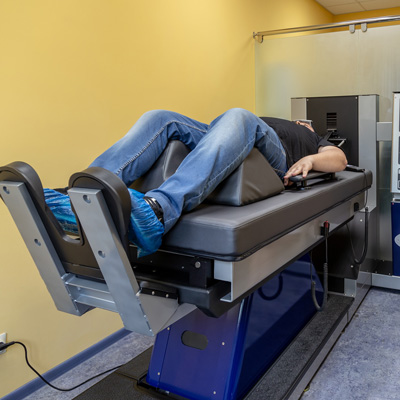
Spinal decompression is a gentle, controlled stretching of the spine. There’s no cracking, no invasive procedure, and no significant discomfort. Most patients find the sessions genuinely relaxing – some fall asleep during treatment.
How Spinal Decompression Helps You Heal – Not Just Feel Better
The mechanism behind lasting results:
- Reduces intradiscal pressure – allowing herniated or bulging material to retract
- Improves nutrient and fluid exchange – supporting actual disc tissue repair
- Decreases nerve irritation – by removing the mechanical pressure driving the signal
- Supports the body’s natural healing process – rather than overriding it with medication or cutting around it with surgery
See more: Is Spinal Decompression Therapy Safe? – From Tampa Chiropractor
How to Know for Sure: The Next Step
If you recognize yourself in this list, the most useful thing you can do isn’t more research – it’s a proper evaluation. That means:
- Physical examination – range of motion, neurological testing, orthopedic assessment
- Posture and movement analysis – identifying compensation patterns
- Possible imaging review – MRI or X-ray if already available
- A clear report of findings – so you understand exactly what’s driving your pain
Ready to Find Out If Spinal Decompression Is Right for You?
You don’t have to guess. You don’t have to keep managing pain that hasn’t responded to what you’ve already tried.
At Chiropractic Care Centre, Dr. Dean Brown brings extensive clinical experience in spinal decompression and complex disc conditions to every evaluation. As your trusted Chiropractor Tampa, FL, we’ll assess your spine thoroughly, give you a straight answer about whether you’re a candidate, and build a personalized treatment plan around your actual diagnosis – not a generic protocol.
Schedule your evaluation today and get the clarity that finally moves you forward.
This article is educational. It does not replace a clinical evaluation or personalized medical advice.