
What Is the Best Home Treatment for Sciatica?
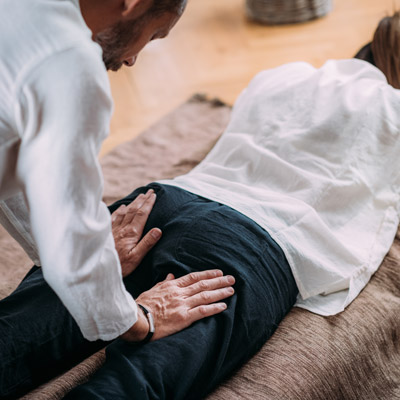
If you’re dealing with that sharp, shooting pain running down your leg, you’re not alone. We see patients every day at our Tampa practice asking this exact question: what is the best home treatment for sciatica? The good news is that most sciatica cases respond well to conservative care you can start at home today.
Let’s walk through proven strategies that can help you find relief while addressing the root cause of your pain.
What Is Sciatica and Why Does It Happen?
Sciatica isn’t actually a condition – it’s a symptom. When your sciatic nerve (the longest nerve in your body) gets irritated or compressed, you feel that signature radiating pain from your lower back down through your leg. The sciatic nerve consists of nerve roots from L4 through S3, which means problems anywhere along this pathway can trigger symptoms.
Common causes include:
- Herniated or bulging discs
- Spinal misalignment
- Piriformis syndrome (tight hip muscle)
- Inflammation and swelling
- Spinal stenosis (narrowing of spinal spaces)
Understanding what’s causing your specific sciatica matters because it helps you choose the most effective home treatment approach.
See more: Can a Chiropractor Help with Sciatica?
Best Home Treatments for Sciatica Pain Relief
1. Gentle Stretching (Often the Best Home Treatment)
Here’s what we tell every sciatica patient: gentle, targeted stretching is your first line of defense. Stretching is one of the most effective ways to relieve sciatica pain and promote long-term healing, and it costs you nothing but a few minutes each day.
Essential stretches to try:
- Piriformis stretch: Lie on your back, cross the affected leg over the other knee, and gently pull toward your chest. Hold for 30 seconds.
- Knee-to-chest: Pull one knee toward your chest while keeping the other leg extended to release lower back tension.
- Sciatic nerve glides (nerve flossing): These crucial movements help desensitize the nerve and improve mobility.
- McKenzie extensions: For disc-related sciatica, gentle back extensions can help move herniated material away from the nerve.
How to stretch safely:
- Start with 2-3 repetitions, holding each for 20-30 seconds
- Perform stretches 2-3 times daily
- Stop immediately if pain increases or shoots down your leg
- You should feel a gentle stretch, never sharp pain
2. Heat and Cold Therapy
Temperature therapy is simple but powerful for sciatica pain relief at home. Improved blood flow from gentle movement accelerates the healing process by delivering oxygen and nutrients to injured tissues.
Here’s our protocol:
- Ice first: Apply ice for 15-20 minutes during the first 48-72 hours to reduce inflammation
- Heat second: After initial inflammation subsides, use heat to relax tight muscles
- Alternate when needed: Some patients find alternating hot and cold provides the best relief
- Frequency: Use 3-4 times daily, never directly on skin
3. Low-Impact Movement & Exercise
This surprises many patients, but complete rest actually worsens sciatica. Most cases of sciatica resolve in less than 4 to 6 weeks with no long-term complications, even if no medical therapy is sought.
Best activities for sciatica:
- Walking for 20-30 minutes daily
- Swimming or water aerobics
- Stationary cycling (upright position)
- Light core strengthening exercises
Movement keeps your muscles active, improves circulation, and prevents stiffness. Start slowly and gradually increase duration as tolerated.
4. Over-the-Counter Pain & Inflammation Relief
While we prefer non-pharmaceutical approaches, these can help during acute flare-ups:
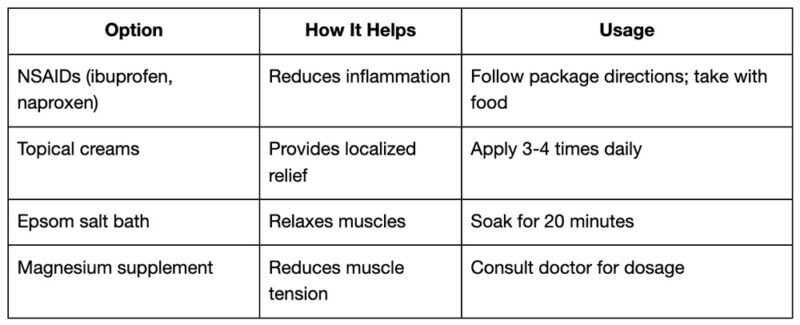
5. Posture Correction & Ergonomics
Poor posture constantly aggravates your sciatic nerve. Small adjustments make a big difference.
Key positions:
- Sitting: Keep feet flat, knees at 90 degrees, lumbar support behind lower back
- Standing: Distribute weight evenly, avoid locking knees
- Sleeping: Side-lying with pillow between knees, or back-lying with pillow under knees
- Driving: Adjust seat to support lower back, take breaks every hour
6. Avoid Prolonged Sitting or Standing
Compression is the enemy of sciatica recovery. We recommend the 30-45 minute rule: change positions at least this often. Set a timer on your phone as a reminder to stand, stretch, or walk briefly.
7. At-Home Massage & Self-Release Techniques
Target your glutes, piriformis, and lower back with:
- Tennis ball or massage ball against a wall
- Foam roller for broader muscle groups
- Gentle self-massage with hands
Caution: Avoid deep massage if you have severe pain, numbness, or weakness. These require professional evaluation.
8. Natural Anti-Inflammatory Home Remedies
Regular stretching exercises, when performed consistently, can decrease pain intensity and enhance mobility. Support this with anti-inflammatory nutrition:
- Turmeric/curcumin supplements
- Omega-3 fatty acids (fish oil)
- Reduce sugar, alcohol, and processed foods
- Increase fruits, vegetables, and whole grains
9. Best Sleeping Positions for Sciatica
Sleep quality directly affects healing. Try these positions:
- Option A: Back with pillow under knees to reduce lumbar curve
- Option B: Side with pillow between legs to keep hips aligned
Avoid: Stomach sleeping, which increases spinal stress
What NOT to Do at Home
Certain activities will set back your recovery:
- Heavy lifting or twisting movements
- Prolonged inactivity or bed rest
- Deep forward bending exercises
- Ignoring progressive numbness or weakness
- Pushing through sharp, shooting pain
When Home Treatment Is Not Enough (Red Flags)
Seek immediate medical attention if you experience:
- Progressive numbness or weakness in your leg
- Loss of bowel or bladder control
- Pain worsening after 2-4 weeks of home care
- Severe nighttime pain that disrupts sleep
- Difficulty walking or foot drop
- Unexplained fever with back pain
Why Chiropractic Care & Spinal Decompression Are Often Needed
Here’s the truth: home care reduces symptoms, but it doesn’t always correct the underlying problem. That’s where professional chiropractic treatment for sciatica becomes essential.
Chiropractic adjustments restore proper spinal alignment, removing mechanical pressure on nerve roots. Spinal decompression for sciatica creates negative pressure in the disc, allowing bulged material to retract away from the nerve. According to recent reviews, spinal decompression therapy has been effective in over 75% of patients who have received it.
When you combine home self-care with professional treatment, you address both symptoms and causes. At our practice as a chiropractor Tampa patients trust, we create customized treatment plans that integrate both approaches for optimal healing.
Good candidates include those with:
- Herniated or bulging discs
- Chronic sciatica lasting beyond 6 weeks
- Recurring episodes
- Limited response to home care alone
Expected outcomes: Most patients notice improvement within 4-6 visits, with significant relief achieved in 8-12 sessions. The goal isn’t just pain relief – it’s restoring proper function and preventing recurrence.
Take the Next Step Toward Relief
The best home treatment for sciatica combines multiple approaches: targeted stretching, proper posture, gentle movement, and inflammation control. Most importantly, listen to your body and don’t ignore warning signs.
If you’ve been trying home remedies without adequate improvement, it’s time to explore professional care. We specialize in evidence-based, non-surgical sciatica treatment options that get to the root of your problem.
Ready to find lasting relief? Contact Chiropractic Care Centre today to schedule your comprehensive evaluation. Let’s create a personalized treatment plan that combines the best of at-home self-care with professional spinal correction.
FAQs
What is the fastest way to stop sciatica pain at home?
Combine ice therapy, gentle nerve glide stretches, and an anti-inflammatory like ibuprofen for acute relief. However, lasting improvement requires consistent daily stretching and movement.
Can sciatica heal without treatment?
Most cases resolve in less than 4 to 6 weeks, but proper home care accelerates healing and reduces recurrence risk.
Is walking good or bad for sciatica?
Walking is excellent for most sciatica cases. Start with 10-15 minutes and gradually increase. Stop if pain intensifies.
Should I use heat or ice?
Use ice first for acute inflammation (first 48-72 hours), then switch to heat for muscle relaxation. Some patients benefit from alternating both.
How long does sciatica take to heal?
Most cases improve within 4-6 weeks with proper care. Severe cases or those with structural issues may take longer and benefit from professional intervention.
Can a chiropractor fix sciatica?
Yes, non-surgical sciatica treatment through chiropractic care addresses spinal misalignment and nerve compression effectively. Many patients avoid surgery entirely with consistent chiropractic treatment and spinal decompression.